
Stabilizing Leaning Fences Before Winter Storms
As the dry summer months fade into our familiar PNW autumn, homeowners across The Valley know it's time to prepare for the inevitable shift in weather. With heavy rains and gusty winds on the horizon, weak points in your home's exterior are quickly exposed. One of the most vulnerable, yet often overlooked, structures is your property line fencing. If you have noticed a slight tilt in your boards or a wobble in your posts, acting now can save you from a complete collapse later.
At M&R General Construction, we see firsthand how proactive maintenance can protect your property and your wallet. A structure that leans slightly in October can easily become a tangled mess of broken wood and exposed nails after a heavy December gale. In this guide, we'll walk through exactly what causes these issues and how you can shore up your yard's perimeter before the heavy weather sets in.
Understanding the Root Cause: Soil and Moisture
Before you can effectively fix a tilt, it helps to understand why it's happening. In Oregon, the combination of our wet season and heavy clay soils creates the perfect storm for structural shifting. When the ground becomes saturated, it loses its ability to hold posts firmly in place. Furthermore, constant exposure to moisture accelerates decay at the base of wooden supports.
Preventing fence post rot in saturated soil is critical for the long-term health of your structure. When water pools around the concrete footing or directly against the wood, it creates an environment where decay thrives. This rot hollows out the structural integrity of the post, meaning even a mild breeze can cause the entire section to list. To combat this, ensure proper drainage away from the posts, consider gravel bases for new installations, and treat existing wood with high-quality sealants designed for damp climates.
How to Stabilize a Leaning Wood Fence
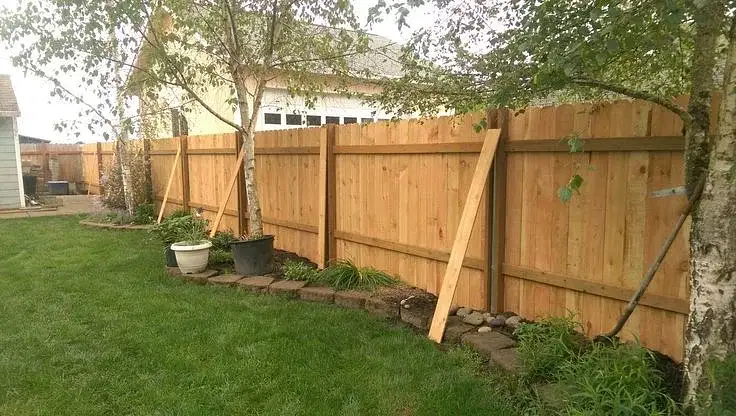
If the damage has already started and you are looking at a noticeable tilt, you need to know how to stabilize a leaning wood fence before the next major wind event. The method you choose depends heavily on the severity of the lean and the condition of the post.
If the post is completely rotted at ground level, stabilization is only a temporary fix; a full replacement of that specific support is required. However, if the wood is still solid but the ground has simply given way, you can brace it. This involves digging carefully around the base, pushing the post back to a plumb, level position, and pouring new fast-setting concrete to anchor it firmly.
For posts with minor surface decay but strong cores, you might consider 'sistering'. This involves driving a new pressure-treated wood stake or a metal U-channel post directly alongside the failing one and bolting them tightly together. This instantly reinforces the weak point and adds years of life to the structure without requiring a full tear-down.
Protecting Your Panels from High Winds
It isn't just the posts that take a beating during winter storms; the large surface area of your panels acts like a giant sail when the wind picks up. Securing privacy fence panels against wind damage is a crucial step in your autumn preparation checklist.
Start by inspecting the rails—the horizontal boards that connect the posts and hold the vertical pickets. Check for loose, missing, or rusted fasteners. Replacing old nails with heavy-duty exterior wood screws will dramatically increase the holding power. Nails tend to pull out over time as wood swells and contracts with moisture, but screws provide a much stronger, permanent grip.
Additionally, if you live in a particularly exposed area, you might want to ensure your layout isn't fighting the wind too hard. While solid privacy panels are great for seclusion, allowing just a tiny bit of airflow through the structure reduces the overall wind load, taking pressure off the posts and rails alike.
Professional Help When You Need It
Sometimes, despite your best efforts, a structure is simply too far gone or the scale of the stabilization project is too much for a weekend DIY. Properly installed perimeters don't just look better; they provide essential security, safety for pets and children, and peace of mind during those loud, stormy nights.
If you're unsure about the integrity of your perimeter or know you need professional fencing upgrades, investing in expert help ensures the job is done right. Using materials chosen specifically to withstand our local climate makes all the difference in longevity.
Don't wait until a post snaps and takes down half your yard with it. Reach out to the experienced team at M&R General Construction here in Monmouth. We are ready to help you evaluate your property, offer transparent solutions, and ensure your home is fully prepared for whatever the winter brings. Contact us today to schedule a thorough assessment.